
The Role of Social Media for Small Business Success
Running a small business in a busy city means staying visible and connected feels harder every day. Social media is not just about posting photos or announcements. This guide explains how urban business owners can use popular platforms like Facebook and Instagram to create genuine conversations, reach new customers, and build loyalty without needing a big budget.
Common Sense Marketing Team


Key Takeaways
Social Media as a Business Tool: Small businesses should view social media as a vital communication tool for customer engagement and brand storytelling rather than just a marketing platform.
Platform Strategy is Crucial: Selecting the right social media platforms tailored to target audiences enhances reach and effectiveness in engagement.
Consistency Builds Trust: Regular, high-quality posts and timely customer interactions are essential for enhancing audience trust and loyalty.
Avoid Common Mistakes: Small businesses must be cautious of inconsistent posting, neglecting audience engagement, and failing to analyze performance to avoid wasted resources.
Defining Social Media for Small Business
Social media has evolved from a casual communication platform to a critical business strategy tool. For small businesses, it represents far more than just posting occasional updates. Social media is a dynamic digital ecosystem where businesses can connect, engage, and grow their customer base through interactive online platforms.
At its core, social media encompasses diverse internet-based applications that allow users to create, share, and interact with content. Small business social media platforms serve multiple strategic functions beyond simple marketing - they provide affordable global audience access, enable customer engagement, and support operational capabilities. These platforms range from networking sites like Facebook and LinkedIn to visual platforms like Instagram and video channels like YouTube.
For small business owners, social media represents a powerful communication toolkit. It enables direct customer interaction, brand storytelling, and cost-effective marketing that traditional advertising cannot match. By leveraging internet-based communication technologies, businesses can showcase their unique value, build community trust, and compete with larger enterprises on a more level playing field.
Pro tip: Treat social media as a conversation, not a megaphone - focus on creating genuine connections rather than just broadcasting messages.
Major Platforms and Their Unique Benefits
Small businesses today have unprecedented access to powerful social media platforms, each offering unique strategic advantages. Social media platform selection requires understanding the distinct capabilities and audience characteristics of different digital channels.
Facebook remains the cornerstone platform for small businesses, providing robust advertising tools and extensive community engagement opportunities. Its massive user base and sophisticated targeting algorithms enable businesses to reach precise demographic segments. Instagram follows closely, specializing in visual storytelling and brand presentation. Platform strengths for marketing vary significantly - while Facebook excels in broad reach, Instagram attracts younger audiences through compelling visual content.
LinkedIn offers professional networking capabilities, ideal for B2B businesses and service-oriented companies. Twitter provides real-time communication channels perfect for customer service and rapid brand interactions. Emerging platforms like TikTok have revolutionized short-form video marketing, allowing businesses to create viral, trend-driven content that captures audience attention quickly. Each platform demands a tailored approach, considering factors like content style, target audience demographics, and specific business objectives.
Here's a summary of key social media platforms and their primary benefits for small businesses:
Facebook: Broad audience reach, Local & global businesses, Advanced targeting, large groups
Instagram: Visual storytelling, Lifestyle, retail, food, arts, Strong brand profiling, hashtags
LinkedIn: Professional networking, B2B/service industries, Lead generation, partnerships
Threads: Real-time communication, News, brands, tech companies, Fast, open customer feedback
TikTok: Viral short videos, Trend-driven, youth planners, Quick exposure, influencer reach
Pro tip: Don't try to master every platform simultaneously - choose 2-3 platforms that best align with your target audience and business goals, then develop high-quality, consistent content strategies.
Essential Features for Building Trust and Growth
Building trust and achieving sustainable growth on social media requires a strategic approach that goes beyond simple content posting. Social media strategies for SMEs demand a nuanced understanding of digital engagement and relationship building.


Consistent content quality stands as the cornerstone of effective social media presence. This means developing a cohesive brand narrative that speaks directly to your target audience, with posts that are professionally crafted, visually appealing, and aligned with your business values. Customer engagement metrics reveal that businesses which demonstrate authentic, transparent communication see significantly higher levels of audience trust and loyalty.
Responsiveness is another critical feature for small business social media success. This involves more than just answering customer comments - it means actively listening, providing thoughtful replies, and showing genuine interest in customer feedback. Platform analytics tools can help businesses track engagement rates, understand audience preferences, and refine their communication strategies. By creating a two-way dialogue instead of a one-sided broadcast, small businesses can transform their social media channels into powerful relationship-building platforms.
Pro tip: Develop a consistent response time standard for social media interactions - aim to reply to customer messages and comments within 4-6 hours during business days to demonstrate reliability and commitment.
Costs, Risks, and Common Pitfalls to Avoid
Social media marketing for small businesses comes with a complex landscape of potential expenses and strategic challenges. Small business social media risks encompass multiple financial and reputational dimensions that require careful navigation.
The primary costs include paid advertising, professional content creation, and dedicated time for social media management. Many small businesses underestimate the resources required, leading to inefficient spending. Platform management challenges reveal that overspending on ads without clear objectives can quickly drain marketing budgets. Businesses must develop a strategic approach that balances investment with realistic expectations, focusing on targeted campaigns that deliver measurable results.
Reputational risks represent another critical concern. A single inappropriate post, delayed customer response, or mishandled online interaction can cause significant brand damage. Potential pitfalls include inconsistent messaging, neglecting audience feedback, failing to understand platform algorithms, and inadequate performance tracking. Small businesses must implement robust monitoring systems, establish clear communication guidelines, and remain agile in responding to online interactions to mitigate these risks effectively.
Pro tip: Create a simple social media risk management checklist that includes content approval protocols, response time standards, and quarterly performance review processes to proactively prevent potential marketing mishaps.
Mistakes Small Businesses Make with Social Media
Social media success requires strategic planning and nuanced understanding. Common social media pitfalls reveal significant challenges that can derail small business digital marketing efforts, often stemming from misconceptions about online engagement.
One of the most prevalent mistakes is maintaining an inconsistent posting schedule. Many small businesses approach social media randomly, publishing content sporadically without considering audience expectations or platform algorithms. This inconsistency signals unreliability to potential customers and reduces algorithmic visibility. Social media marketing strategies demonstrate that businesses must develop a structured content calendar that balances frequency, quality, and strategic timing.
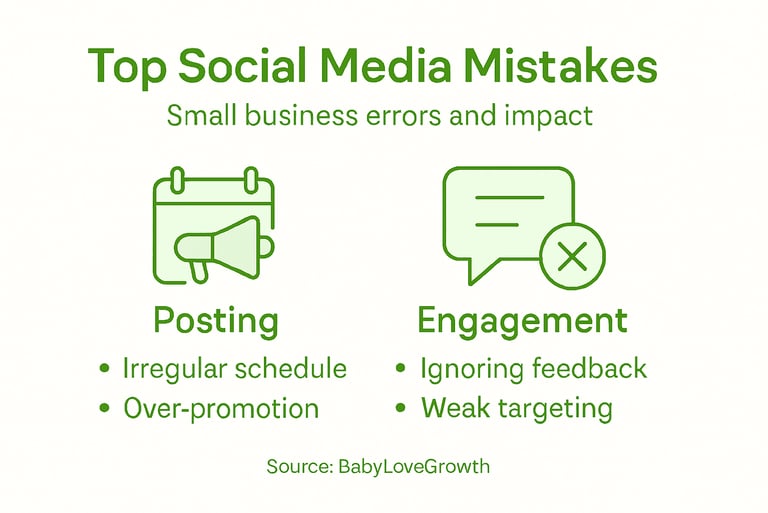
Another critical error is neglecting audience interaction and demographic targeting. Small businesses frequently broadcast generic content without understanding their specific audience's preferences, behaviors, and pain points. This approach results in low engagement, minimal reach, and wasted marketing resources. Successful social media marketing requires deep audience research, platform-specific content customization, and a commitment to genuine, two-way communication that goes beyond simple promotional messaging.
Use this table to identify and avoid common social media pitfalls:
Irregular posting = Weeks without updates = Loss of follower interest
Ignoring audience engagement = Not responding to comments = Perceived lack of care
Poor demographic targeting = Same content across all platforms = Low engagement, wasted budget
Inconsistent brand messaging = Mixed tone and visuals = Brand confusion, mistrust
Failing to review analytics = Never checking performance data = Missing improvement opportunities
Pro tip: Develop a content planning spreadsheet that tracks posting frequency, audience engagement metrics, and specific platform performance to systematically improve your social media strategy.
Unlock Your Small Business Potential with Trusted Social Media Strategies
The article highlights the challenge small businesses face in building consistent trust and engagement through social media while avoiding common pitfalls like irregular posting and poor audience targeting. If you are struggling to create a practical strategy that connects with your audience and generates measurable growth, you are not alone. Key goals such as authentic customer interaction, tailored content, and reliable responsiveness are essential yet time-consuming when done alone.
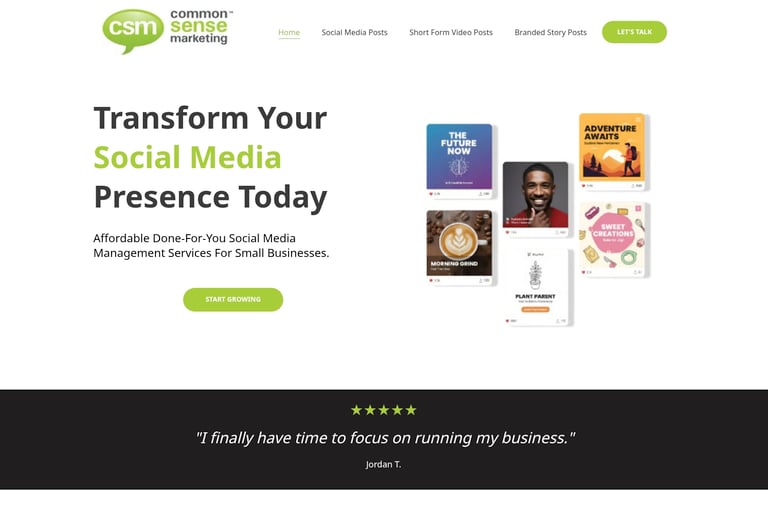
At CSM Team, we specialize in helping small and local businesses overcome these exact hurdles by delivering trust-driven visibility through social media strategy, content, and ads that actually make sense. Our done-for-you, month-to-month service means no setup fees or contracts, freeing you to focus on what matters most—growing your business with confidence. Explore our approach and learn how consistent, strategic social media management can transform your online presence.
Ready to stop guessing and start growing? Visit CSM Team today to build a social media presence that truly resonates with your audience and drives results. Take control of your small business success with expert support designed just for you.
Frequently Asked Questions
What is the role of social media for small businesses?
Social media serves as a crucial tool for small businesses to connect with customers, engage their audience, and execute cost-effective marketing strategies, ultimately driving growth and brand recognition.
How can small businesses choose the right social media platform?
Small businesses should consider their target audience, business goals, and content style when selecting platforms. For example, Facebook is great for broad reach, while Instagram is ideal for visual storytelling and reaching younger demographics.
What are some common mistakes small businesses make on social media?
Common mistakes include inconsistent posting schedules, neglecting audience engagement, poor demographic targeting, and failing to review analytics, which can hinder growth and reduce visibility.
How can small businesses build trust with their audience on social media?
Building trust involves maintaining high-quality content, being responsive to customer inquiries, and demonstrating authenticity in communications. Engaging in two-way conversations rather than one-sided marketing can significantly enhance audience loyalty.
"Way easier than I expected"
Mark R.
★★★★★
Ready To Love Social Media?
Join all of the successful brands who've run their social media presence with common sense marketing.
hello@csmteam.ca
PO Box 7 Stn A
Nanaimo, BC V9R5K4
1.833.CSM.TEAM

Insightful Blogs
Post Examples
Client Dashboard
Community Support
Other Stuff
Let's Talk
Fun Stuff