
7 Essential Social Media Tips for Small Businesses
Running social media for your business can leave you feeling scattered and unsure. With so many platforms, strategies, & changes, what you need is a clear playbook that connects your efforts directly to outcomes. This list gives you actionable steps backed by proven strategies to set meaningful goals, choose the best channels, and create content that truly connects.
Common Sense Marketing Team


Table of Contents
Define Clear Social Media Goals For Your Business
Choose The Right Platforms For Your Audience
Create Consistent And Authentic Content
Engage Regularly With Followers And Respond Quickly
Use Visuals And Videos To Increase Engagement
Monitor Performance And Adjust Your Strategy
Leverage User-Generated Content For Trust
Quick Summary
Define Clear Goals: Establish specific, measurable, attainable, relevant, and time-bound goals for social media. This guides efforts and aligns with business outcomes.
Choose Appropriate Platforms: Identify platforms where your audience is active. Focus efforts on two to three platforms to maximize engagement and minimize burnout.
Engage Consistently: Respond to comments and messages quickly to build relationships and show your audience you value their engagement. Regular interactions foster loyalty.
Use Visuals Effectively: Incorporate images and videos in posts to capture attention and enhance engagement, as visuals are processed faster than text.
Leverage User-Generated Content: Encourage customers to share their experiences and showcase their content. Authentic testimonials and reviews build trust more effectively than corporate messages.
Define Clear Social Media Goals for Your Business
You cannot hit a target you haven't defined. This is the foundation of every successful social media strategy. Without clear goals, your business ends up posting randomly, measuring nothing, and wondering why social media feels like a waste of time.
When you define what you actually want to achieve on social media, everything else becomes easier. Your team knows what to focus on. Your content has purpose. Your budget gets spent on activities that matter. You stop chasing trends just because everyone else is talking about them.
Why Clear Goals Matter
Think of social media goals as the compass that directs all your efforts. Purposeful goals help manage communication effectively and ensure that every post, every interaction, and every dollar you spend moves you closer to actual business results. Without them, your team operates in chaos, and your results become invisible.
Clear objectives also protect your time and resources. Small and medium-sized business owners often feel overwhelmed because they're trying to do everything at once. When you know exactly what success looks like, you can say no to activities that don't serve your goals and yes to what actually works.
How to Set Goals That Actually Work
The most effective approach uses what's known as SMART goals. Specific goals tell you exactly what you're aiming for, not vague wishes like "get more followers." Instead, you might aim for "gain 500 new local customers per month through Facebook and Instagram." Measurable goals ensure you can track progress. You need numbers. Attainable goals keep you realistic so your team stays motivated instead of frustrated. Relevant goals connect to your actual business objectives, whether that's revenue growth, customer retention, or brand awareness. Time-bound goals give you a deadline, which creates urgency and helps you evaluate whether your strategy is working.
For example, a small consulting firm might set this SMART goal: Increase qualified leads from social media by 40 percent within six months. This is specific (qualified leads), measurable (40 percent), attainable (realistic for their market), relevant (leads drive revenue), and time-bound (six months).
Connecting Goals to Business Outcomes
Your social media goals should never exist in isolation. They must connect directly to what your business is trying to accomplish. If you're trying to increase sales, your social media goal might focus on driving traffic to your sales page or generating direct customer inquiries. If you're building brand trust, you might prioritize creating content that attracts audiences and demonstrates your expertise over a longer timeframe.
This alignment ensures that every minute spent on social media contributes to real business success. You're not just building vanity metrics. You're building a business asset that drives actual outcomes.
Common Goals to Consider
Different businesses prioritize different outcomes. A retail shop might focus on foot traffic and local awareness. A consulting firm might prioritize qualified leads and thought leadership. An e-commerce business might focus on direct sales and customer retention. A service provider might emphasize booking appointments and customer reviews. The key is identifying which outcomes matter most to your bottom line, then building social media goals around those outcomes.
Many businesses benefit from setting multiple goals. You might pursue both short-term sales goals and longer-term relationship-building goals. The mix depends on your business stage and what you need right now.
Tracking Progress and Adjusting Course
Once your goals are set, the real work begins. You need to know whether you're actually achieving them. This means identifying the key performance indicators that show progress toward each goal. If your goal is "increase qualified leads by 40 percent in six months," you need to track how many leads you're generating each month and whether they're the right kind of leads.
Tracking doesn't mean obsessing over every metric. Focus on what actually predicts success for your business. Regular reviews let you see what's working and what needs adjustment.
Pro tip: Write your social media goals down and share them with your team, then review progress monthly to stay accountable and catch what needs to change before months slip away.
Choose the Right Platforms for Your Audience
Not all social media platforms are created equal, and not all of them deserve your attention. Posting everywhere sounds smart until you realize you are stretched thin, burning out, and seeing minimal results. The real strategy is choosing the platforms where your actual customers spend their time.
Your audience has specific digital habits. They hang out in certain places. They consume content in particular formats. They engage with businesses in ways that feel natural to them on those platforms. When you match your presence to where they already are, everything becomes easier. Your message reaches them when they are ready to hear it. Your content resonates because it fits the platform. Your team can focus their energy instead of spreading it across ten places where nobody is listening.
Understanding Where Your Audience Lives
The first step is researching your specific target audience's demographics, psychographics, and digital habits. This sounds formal, but it is actually straightforward. You need to know basics like age, location, and income level. You also need to understand what they care about, what problems they are trying to solve, and what platforms they actually use.
For a local plumbing business, your customers are probably not scrolling through TikTok looking for drain repair content. They are likely searching on Google, checking Facebook, or asking neighbors for recommendations. For a B2B consulting firm, LinkedIn is where your prospects spend professional time. For a retail fashion brand, Instagram and Pinterest are where your audience discovers inspiration and products. Understanding platform audience profiles enables you to tailor content where it resonates most.
Think about the platforms your competitors are using. If you see them thriving on a particular platform, that tells you something valuable about where your shared audience is. But do not copy blindly. Your audience might be different from your competitor's audience, so do your own research.
Platform Characteristics That Matter
Each major platform has a distinct personality and purpose. Facebook reaches the broadest demographic, including older adults and families. It works well for community building, local business promotion, and customer service. Instagram is visual and younger, perfect for brands with strong aesthetic appeal. LinkedIn is professional and B2B focused, ideal for thought leadership and recruitment. TikTok is short form and trend driven, reaching Gen Z and younger millennials. YouTube is video content and search driven, perfect for tutorials and demonstrations. Twitter is real-time conversation and news, useful for timely engagement.
The platform you choose should match both your audience and your content type. If you create video tutorials, YouTube makes sense. If you share industry insights and recruit talent, LinkedIn makes sense. If you have a local storefront and want community connections, Facebook makes sense. Matching platform to audience to content type is how you win.
Making Your Platform Choice
Start by listing the platforms where you think your audience spends time. For most small and medium-sized businesses worldwide, this list is short. Pick two or three platforms maximum. This is not about FOMO. This is about focus. When you master two platforms, your results will outpace someone spreading effort across five.
Test your hypothesis. Create content on your chosen platforms for 30 days. Track engagement, follower growth, and whether you are actually connecting with the right people. After 30 days, evaluate whether you are getting real interaction from real customers or just going through motions. Use this data to confirm whether you picked right or whether you need to adjust.
Many small businesses find that Facebook and Instagram work well because they control both and can cross post strategically. Others find that LinkedIn alone drives all their meaningful leads. Still others focus on Google Business and organic search rather than traditional social platforms at all. The answer depends on your specific business and audience.
Avoiding the Platform Trap
Here is where most businesses go wrong. They open accounts on every platform, post inconsistently, fail to see results, then blame social media itself. The problem is not social media. The problem is scattered effort.
Picking the right platforms also means saying no to other platforms, at least for now. You can always expand later once you have proven success on your core platforms. Right now, focus beats breadth.
Pro tip: Spend one hour interviewing three of your best customers and ask which social media platforms they use and why, then build your platform strategy around those answers instead of guessing.
Create Consistent and Authentic Content
Your audience can smell inauthenticity from a mile away. When your content feels like a sales pitch dressed up as helpful advice, people scroll past. When it feels like you copied what another company posted, nobody takes it seriously. Real connection happens when your content is genuinely yours and shows up reliably.
Consistency and authenticity work together. Consistency means your audience knows what to expect from you. It means they recognize your voice, your values, and your perspective. Authenticity means you are not pretending to be something you are not. You are sharing real insights from real experience. Together, these two elements build trust faster than any amount of advertising spending ever could.
Why Authenticity Matters More Than Perfection
Most small business owners think their social media content needs to be perfectly polished, professionally produced, and corporate in tone. That is exactly backward. Your audience does not follow you to see corporate perfection. They follow you because they want to work with real people who understand their problems.
Authentic content reflects genuine, real-life context and engages audiences honestly. When a local contractor shares photos from actual job sites with honest before and after comparisons, customers believe them. When a consultant shares both wins and lessons learned from failed projects, people respect their credibility. When a shop owner shows the messy reality of opening a new location, customers feel connected to the journey.
This does not mean posting amateur content or ignoring quality. It means your content should feel real, not manufactured. It should sound like you talking to a friend, not a corporation reading from a script.
Building Consistency Into Your Routine
Consistency in tone, message, and frequency supports audience expectations and reinforces your brand identity. People need to know they can count on you. If you post three times one week and nothing the next, your audience loses momentum. If your messages contradict each other or shift dramatically week to week, people get confused about what you actually stand for.
Start by defining your content pillars. What topics do you always speak about? What perspective is uniquely yours? For a financial advisor, this might be demystifying retirement planning and challenging bad money myths. For a fitness coach, it might be sustainable habits and challenging toxic fitness culture. For a plumbing company, it might be practical homeowner tips and honest pricing transparency. These pillars become your consistent message.
Next, establish a posting schedule you can actually maintain. If you say you will post daily but only post three times a month, that inconsistency damages trust. If you say you will post three times weekly and stick to it, your audience knows when to expect you. How often you should be posting matters less than actually showing up when you say you will.
Finding Your Authentic Voice
Your voice is how you communicate. Is it formal or casual? Educational or entertaining? Serious or humorous? Your voice should match your brand and your audience. A law firm sounds different from a coffee shop. A B2B software company sounds different from a personal trainer. The key is finding the version of yourself that serves your business without pretending to be someone else.
Consistent messaging aligns with professional standards and audience trust worldwide. This does not mean robotic consistency. It means reliability. Your audience should recognize your perspective and approach. They should know roughly what you will say about a topic because they understand your values and your expertise.
Write down three words that describe how you want people to experience your brand. Are you trustworthy and authoritative? Approachable and friendly? Innovative and forward thinking? Once you define this, your content voice becomes clearer. You start making choices that align with those words.
Practical Steps to Stay Consistent
Create a simple content calendar. You do not need anything fancy. A spreadsheet showing what you will post and when is enough. This prevents the panic of figuring out content on the fly. Plan at least two weeks ahead so you are not scrambling every day.
Keep a swipe file of your best performing content. What posts generated real engagement? What got comments from actual customers? What made people take action? Patterns emerge quickly. Use these patterns to inform future content.
Remember that authentic content does not mean unfiltered chaos. It means intentional realness. A messy workshop photo is authentic. A rambling video with no point is just poorly made. Authenticity plus strategy beats authenticity alone.
Pro tip: Record your best business insights, customer questions, or lessons learned in a notes app throughout the week, then use these raw ideas as the foundation for your content so authenticity comes naturally instead of forced.
Engage Regularly With Followers and Respond Quickly
Social media is not a broadcast channel. It is a conversation. When someone takes time to comment on your post or message you a question, they are essentially raising their hand and saying "Hey, I am interested." If you ignore them, you just told them their interest does not matter. If you respond quickly and meaningfully, you built a relationship.
Engagement is the difference between having followers and having a community. People do business with people they trust, and trust develops through real interaction. When you show up consistently in conversations, answer questions genuinely, and treat your followers like actual people instead of vanity metrics, they become loyal customers and advocates.
Why Speed and Attention Matter
Prompt responses to comments and messages signal attentiveness and foster relationships. Think about how you feel when you reach out to a business and never hear back. Now think about how you feel when someone responds within an hour with a thoughtful answer. The difference is enormous. That speed communicates that you respect their time and care about their question.
Regular engagement increases visibility and trust, which helps maintain a positive reputation. When you comment on other people's posts in your industry, share relevant content from others, and respond to your own followers, the algorithm notices. More importantly, people notice. Your name becomes associated with being helpful, present, and engaged. That builds reputation far more effectively than any advertising.
Engaging regularly with followers by responding quickly to questions or comments fosters community and loyalty. Your followers start to feel like they know you. They talk about you to friends. They come back because they expect you to be there. They defend your business online because they feel personally connected to it.
Creating Systems for Engagement
The challenge for most small business owners is time. You have a business to run. You cannot spend eight hours a day on social media. The solution is creating smart systems that make engagement sustainable.
Start by setting specific times to check your social media accounts. Maybe it is first thing in the morning, at lunch, and before you close for the day. Three times daily is plenty for most businesses. During these times, you check comments, messages, and mentions. You respond to everything that requires a response.
Keep responses brief but genuine. Someone comments asking a quick question? Answer in two or three sentences. Someone leaves a complaint? Acknowledge it, apologize if appropriate, and offer to solve it privately. Someone shares enthusiasm about your product? Thank them personally. These interactions do not need to be long. They need to be real.
What Engagement Actually Looks Like
Engagement means different things depending on your platform and industry. On Facebook, it means responding to comments on your posts and messages in your inbox. On Instagram, it means replying to comments and direct messages. On LinkedIn, it means commenting on relevant industry posts and responding to connection requests. On TikTok, it means responding to comments and engaging with similar creators.
It also means initiating engagement yourself. Do not just wait for people to talk to you. Comment on customer posts if they mention your business. Share and comment on industry news. Answer questions in community groups if your business is relevant. Engage with accounts that your ideal customers follow. This shows up in your feed and helps people discover you.
The goal is becoming a familiar, helpful presence in your industry and community. When someone needs what you offer, your name should be one of the first that comes to mind because you have been genuinely present and helpful.
Avoiding Engagement Theater
Here is the trap to avoid. Engagement without authenticity damages trust. If you respond with generic corporate speak or promotional messages every time, people sense it. If you comment on posts just to drop a link to your website, people see it as spam. Real engagement means adding actual value to conversations.
This is also why building genuine audience growth matters more than chasing follower counts. Ten genuine followers who regularly engage and eventually buy from you are worth infinitely more than 1,000 followers who never comment, never click, and never care. Engagement with the right people creates business results.
Making Engagement a Team Habit
If you have a team, make engagement part of everyone's responsibility. Your social media manager should know that responding to comments within two hours is part of the job. Your customer service team should know to mention positive social media feedback to customers. Your leadership should model engagement by participating themselves.
When engagement becomes a team habit rather than one person's responsibility, it becomes sustainable. No one person burns out. Responses get faster. Your presence becomes truly consistent.
Pro tip: Set a phone reminder for three specific times each day to check and respond to social media comments and messages, then time yourself to see how long it actually takes so you stop assuming engagement requires hours you do not have.
Use Visuals and Videos to Increase Engagement
Text alone does not stop the scroll. In a feed packed with competing content, a plain text post disappears instantly. Add a strong image or video, and suddenly people pause. They look. They engage. The difference between a post that gets ignored and one that drives results often comes down to whether you included a visual.
Your brain processes images 60,000 times faster than text. When someone scrolls past your post, they decide in milliseconds whether to stop or keep moving. Visuals and videos make that decision a yes. They capture attention, communicate your message faster, and drive measurable engagement that text alone cannot match.
Why Visuals Work on Social Media
Visuals, including videos and images, enhance engagement and information retention by providing multisensory learning experiences. When you combine motion, color, and imagery, you activate multiple parts of the brain simultaneously. People do not just see your message. They feel it. They remember it. They want to interact with it.
This is not just theory. It is how human brains work. When you see a beautiful before and after photo of a renovation project, you instantly understand the transformation. When you watch a 30 second video of a product in action, you grasp how it works faster than reading a product description. When you see a chart visualizing data, the patterns become immediately clear.
On social media specifically, videos generate 1200 percent more shares than text and images combined. Posts with images receive 94 percent more engagement than those without. Videos are watched to completion at higher rates than any other content format. The data is overwhelming. Visuals work.
Types of Visuals That Drive Results
Different visuals serve different purposes. High quality product photos are essential for any business selling physical goods. Before and after photos demonstrate transformation and build credibility. Infographics break down complex information into visual patterns people can quickly understand. Carousel posts let you tell a story or showcase multiple products in one post. Videos show personality, expertise, and authenticity in ways static images cannot.
Short form videos have become particularly powerful. These are videos under 60 seconds that grab attention immediately and deliver value quickly. They perform exceptionally well across platforms. A quick tutorial, a behind the scenes look, a customer testimonial, or a problem solving tip in video format gets watched, shared, and remembered.
Making Visuals Work for Your Business
You do not need expensive equipment or professional production. Smartphone photography and basic video recording work perfectly. What matters is that your visuals are clear, well lit, and relevant to your message.
Start by taking photos and videos of your actual business. Show your workspace, your products, your team, your process. This authenticity resonates more than stock photos. If you are a contractor, film yourself on a job site. If you are a consultant, record yourself giving advice. If you are a shop owner, film your products being used. Real visuals beat polished perfection.
Keep videos short. 15 to 60 seconds works best for most platforms. Get to the point immediately. Hook viewers in the first two seconds or they will keep scrolling. Use captions since many people watch without sound. If you can deliver value, entertain, or educate in 30 seconds, you win.
Pairing Visuals With Strong Copy
Visuals grab attention, but copy drives action. A stunning image without context does not convert. A compelling video without a clear call to action does not generate leads. The best posts combine strong visuals with clear, concise written messaging.
Your caption should answer the question why someone should care about this visual. What problem does it solve? What emotion does it create? What action do you want them to take? Keep captions brief but meaningful. Long walls of text lose people, but a few sentences that explain the visual and include a call to action work powerfully.
Common Visual Mistakes to Avoid
Blurry images lose credibility instantly. Poorly lit videos feel unprofessional. Visuals that have nothing to do with your caption confuse people. Overly edited or heavily filtered photos do not feel authentic. Generic stock photos feel impersonal. Cluttered visuals with too much text or too many elements overwhelm viewers.
Keep visuals simple. One clear subject or message per image works better than trying to show everything at once. Good lighting matters more than expensive cameras. Authenticity matters more than perfection. Relevance matters more than aesthetic beauty.
Building a Visual Content Strategy
Think about what visuals tell your story best. If you are a fitness coach, before and after transformation photos and workout videos show results. If you are a restaurant, food photos and behind the scenes kitchen content build appetite and community. If you are a software company, demo videos and screen captures showing your tool in action educate prospects.
Social media post examples can help you see what kinds of visuals work across different industries and platforms. Study what your competitors are posting visually. Notice which posts from accounts you follow actually make you stop scrolling. Let those inspire your own visual strategy without copying them directly.
Motion and imagery support deeper understanding and motivate engagement. Start incorporating visuals into every post you create. Make it a non-negotiable part of your content system. Your engagement rates will reflect the change immediately.
Pro tip: Dedicate one hour monthly to filming 8 to 10 short videos of yourself answering frequently asked questions or demonstrating your process, then batch post them throughout the month so you always have fresh video content without daily filming pressure.
Monitor Performance and Adjust Your Strategy
You cannot improve what you do not measure. Many small business owners post on social media for months, hoping things are working, then wonder why they see no results. The problem is not always the strategy itself. Often it is that they never looked at the data to see what was actually working.
Monitoring your social media performance transforms it from guesswork into a real business tool. When you know which posts drive engagement, which ones convert to customers, and which ones fall flat, you can do more of what works and less of what does not. This is how you move from random posting to strategic execution.
Why Measurement Matters
Measuring and evaluating social media performance is critical to assessing whether your strategic goals are being met. Without data, you are flying blind. With data, you make informed decisions. You stop investing time in activities that do not generate results. You double down on approaches that actually work.
Think of monitoring as having a conversation with your audience. They are telling you what they like through their engagement. They are telling you what resonates by clicking, commenting, and sharing. They are telling you what drives action by converting to customers. Your job is to listen to what they are telling you through the data.
Continuous performance monitoring allows refinement and adjustment of strategies to achieve better outcomes. This is not a one time activity. You do not set up your strategy and forget it. You check in regularly, notice patterns, and adapt. Businesses that adjust based on performance outpace those that stay static.
Key Metrics You Should Track
Not all metrics matter equally. Focus on the metrics that connect to your business goals. If your goal is brand awareness, track reach and impressions. If your goal is engagement and community building, track comments, shares, and response rates. If your goal is driving customers, track click through rates and conversions.
Engagement rate tells you what percentage of your followers interact with your content. A post with 100 likes on 5,000 followers is a 2 percent engagement rate. A post with 100 likes on 1,000 followers is a 10 percent engagement rate. The second one is performing better even though the raw numbers look smaller. Engagement rate shows you how much your actual audience cares about your content.
Reach shows how many unique people saw your post. Impressions show how many times your post was displayed, including if the same person saw it multiple times. These show whether your content is getting visibility. If your reach and impressions are declining, your strategy needs adjustment.
Conversion metrics show whether people are actually taking action. Are they clicking your links? Visiting your website? Filling out forms? Purchasing? These are the metrics that matter most because they connect to actual business results. All the engagement in the world does not matter if nobody ever buys.
How to Actually Monitor Performance
Each platform provides built in analytics. Facebook Business Suite shows you engagement, reach, follower growth, and audience demographics. Instagram Insights shows post performance, story performance, and audience behavior. LinkedIn analytics show profile views, search appearances, and post engagement. YouTube Studio shows watch time, click through rate, and audience retention.
Set up a simple tracking system. Create a spreadsheet. Every month, note your key metrics. Track them over time. Are they going up or down? Which posts are performing best? What type of content generates the most engagement? What time of day do you get the most clicks? Patterns emerge quickly when you look at the data consistently.
You do not need to track everything. Pick three to five metrics that matter most to your business. Track those consistently. Ignore vanity metrics that do not connect to your actual goals. Looking at follower count alone means nothing. Looking at engagement, reach, and conversions tells you everything.
Turning Data Into Action
Monitoring key performance indicators such as engagement, reach, and conversion directs businesses to what works and what needs changing. Once you have data, the real work begins. You need to interpret it and act on it.
If you notice that video posts get 3 times more engagement than text only posts, start creating more videos. If you see that posts about behind the scenes content get better engagement than promotional posts, shift your content mix. If you notice that posts at 6 PM get more engagement than posts at 9 AM, adjust your posting schedule. Data shows you the pattern. Action on the pattern moves your results.
Some changes require testing. If you think a different posting time might work better, test it. Post at the new time for two weeks. Track the results. Compare to the previous results. If performance improves, keep the change. If not, switch back. This iterative approach beats guessing.
Building Accountability Into Your System
The trap many businesses fall into is tracking data without acting on it. You collect months of analytics, see clear patterns, then keep doing exactly what you were doing. That defeats the entire purpose.
Use your data to build accountability. Share it with your team. Set targets. If your engagement rate is currently 2 percent, set a target to reach 3 percent within 60 days. If you are currently converting 1 percent of website visitors, set a target to reach 1.5 percent. These targets force action.
Review your metrics monthly. Block 30 minutes on your calendar. Look at what happened last month. Celebrate what worked. Identify what did not. Plan what you will try differently next month. This habit transforms social media from a vague activity into a managed part of your business.
Avoiding Analysis Paralysis
There is a balance between monitoring and obsessing. Some business owners check their metrics multiple times per day and change their approach daily based on tiny fluctuations. This leads to chaos and inconsistency.
Monitor monthly or quarterly, not daily. Give strategies time to work. Social media results compound. A new approach needs weeks to show results. You need enough data to identify real patterns, not just normal variation. Using data driven insights ensures continuous optimization of your efforts rather than reactive panic.
Set a monthly review schedule. Check your metrics. Notice trends. Make intentional adjustments. Then focus on execution for the next month instead of obsessing over daily numbers.
Pro tip: Screenshot your key metrics on the first day of each month and save them in a folder, then spend 15 minutes reviewing the past three months of screenshots to spot trends that inform your strategy adjustments rather than getting lost in individual daily fluctuations.
Leverage User-Generated Content for Trust
People believe other people far more than they believe companies. When a customer posts a photo of your product in their home and raves about it, that carries weight. When someone leaves a genuine review sharing their experience, that builds trust. When a client shares a testimonial video about how you solved their problem, that sells better than any advertisement you could create.
User-generated content is the most powerful trust builder available to your business. It is authentic, relatable, and transparent communication from real customers using your product or service. It tells potential customers that real people like them have chosen you and are happy about it.
Why User-Generated Content Works
User-generated content significantly enhances brand trust by providing authentic, relatable, and transparent communication from real consumers. Think about your own buying decisions. When you are considering a purchase, what influences you more? A company telling you their product is amazing, or five customers showing you they use it and love it? The answer is obvious.
This is not manipulation. This is how trust actually works. We trust people more than corporations. We trust people who are like us more than we trust faceless marketing departments. When someone who shares our values or situation vouches for you, we listen.
Testimonials, reviews, and user-shared videos boost perceived credibility and engagement, fostering stronger emotional connections with audiences worldwide. The key word is perceived credibility. Your marketing team saying you are trustworthy does not make people trust you. Your customers saying you are trustworthy actually does.
Caution is warranted against overly commercialized content. When user-generated content feels fake or forced, it damages trust instead of building it. Authentic customer stories work. Staged reviews do not. Real before and after photos work. Photoshopped ones do not.
Types of User-Generated Content
Customer reviews and ratings are the foundation. Most businesses today live or die by their reviews. A business with 50 five-star reviews beats a business with no reviews, regardless of how good the product is. Reviews should be easy for customers to leave. The easier you make it, the more reviews you get.
Photos and videos from customers using your product are gold. A real photo from a customer shows your product in actual use. It shows how real people interact with what you offer. It shows the result they achieved. This is far more powerful than any staged product photo your team could create.
Testimonials and case studies go deeper. A customer takes time to write about their experience, the problem they faced, how you solved it, and the results they achieved. This narrative structure persuades people because it mirrors the buyer's journey they are considering.
Social media mentions and tags give you visibility and credibility. When someone posts about you on social media, their friends see it. Their network becomes aware of you. The organic reach and authentic recommendation carries weight.
Encouraging Customers to Create Content
You cannot force authentic user-generated content, but you can encourage it. Start by asking. After a customer purchases, after they receive their order, after they complete a service, ask them to share their experience. Make it easy. Provide a simple form, a link, a hashtag. Remove friction.
Offer incentive without compromising authenticity. You might offer a discount on their next purchase if they leave a review. You might feature the best customer photos on your website and social media. You might give a shout-out to customers who share content featuring your product. These incentives encourage participation without requiring people to fake enthusiasm.
Make it visible that you value customer feedback. Feature reviews prominently on your website. Share customer photos on your social media. Thank customers by name when they leave reviews. When people see that you actually care about customer feedback and showcase it, they become more willing to share their experience.
Building a User-Generated Content System
Create a branded hashtag that makes it easy for customers to tag their content. Something like #YourBusinessName or #MyExperience helps you find and collect customer posts. Make sure the hashtag is easy to remember and not already in heavy use by other brands.
Set up a process for collecting and sharing. Check your branded hashtag regularly. Ask permission to repost customer content on your business accounts. Always credit the original creator. This costs you nothing but shows appreciation and encourages others to create content knowing they might be featured.
Feature customer content regularly on your social media feed. This serves multiple purposes. It shows other customers that real people use your business. It gives customers recognition for their content. It signals to your audience that authentic customer experiences matter to you. It provides fresh content for your channels without you having to create everything yourself.
Handling Negative User-Generated Content
Not all user-generated content will be positive. Some customers will leave negative reviews. Some will post complaints. How you handle these moments matters enormously. Respond promptly and professionally. Acknowledge their experience. Offer to solve the problem. Show that you care about their satisfaction.
Negative reviews handled well actually build trust. When someone sees a company respond constructively to criticism, they see a business that cares about making things right. A company with all five-star reviews looks suspicious. A company with mostly five-star reviews and a few honestly handled negative reviews looks credible.
The Trust Multiplier Effect
Understanding how consumers perceive user-generated content's credibility helps you leverage it effectively. Transparent, genuine content strengthens online trust and engagement, making user-generated content a vital tool for global brand-building efforts. When you build a system where customers regularly create and share content about you, trust multiplies.
New customers see authentic testimonials from people like them. Existing customers feel valued because their content is showcased. Your social media becomes more engaging because it features real people and real stories instead of corporate messaging. Your credibility compounds with each new customer review and post.
Start small. Ask your best customers to share their experience. Incentivize reviews. Create a hashtag. Feature customer content on your channels. Watch as word-of-mouth spreads and user-generated content becomes your most effective marketing tool.
Pro tip: After each customer transaction, send a follow-up email with a direct link to leave a review and a photo upload option, making it so easy that customers can complete the entire process in 60 seconds from their phone.
Below is a comprehensive table summarizing strategies and key considerations for implementing an effective social media strategy as discussed in the article.
Define Clear Goals: Establish SMART goals to align with business objectives. Enhanced focus, efficient resource allocation, and consistency.
Choose Appropriate Platforms: Target platforms where your audience is most active. Optimized reach and audience engagement.
Emphasize Authentic Content: Create genuine and consistent content aligned with brand values. Build trust and long-term follower relationships.
Maintain Engagement: Interact promptly with audience feedback and inquiries. Strengthened community and increased loyalty.
Utilize Visuals and Videos: Integrate eye-catching visuals and engaging videos into posts. Increased post interaction and improved retention.
Monitor and Adapt: Track performance metrics and refine approaches based on data insights. Strategic improvements and sustainable growth.
Leverage User-Generated Content: Encourage customer content creation showcasing product or service use.
Unlock Practical Social Media Success for Your Business Today
Navigating the challenges of defining clear goals, choosing the right platforms, and creating authentic content can feel overwhelming. This article highlights key pain points like inconsistent posting, scattered effort, and lack of engagement which often leave small businesses frustrated and doubting social media's value. If you are ready to move beyond random posting and build trust-driven visibility that truly connects with your audience you need a partner who understands the practicality of social media strategy.
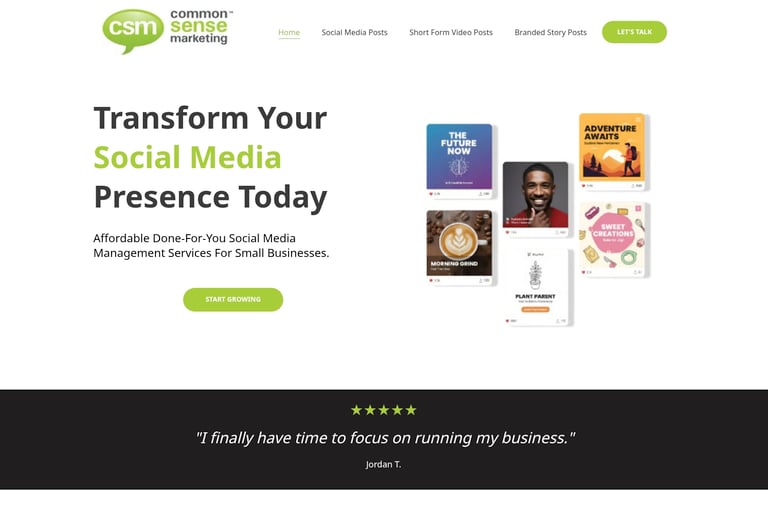
At CSM Team, we specialize in helping small and local businesses like yours craft consistent, authentic social media presence that turns followers into loyal customers. Whether it’s setting SMART goals, selecting platforms your audience actually uses, or leveraging visuals and user-generated content effectively, we provide done-for-you monthly service with no contracts and no setup fees. Don’t let guesswork hold your business back. Visit CSM Team now to get started and build a social media strategy that makes sense and works. Embrace practical social media solutions tailored for your business and watch your engagement and trust grow.
Ready to stop spinning your wheels and start driving real results? Learn more about how to make social media a true asset for your business at CSM Team.
Frequently Asked Questions
What are the best ways to define clear social media goals for my business?
Defining clear social media goals starts with understanding your business objectives. Use the SMART criteria—Specific, Measurable, Attainable, Relevant, and Time-bound—to set actionable goals, such as increasing website traffic by 25% within three months.
How do I choose the right social media platforms for my target audience?
To choose the right social media platforms, research where your target audience spends their time. Identify two or three platforms that align with your audience's digital habits and focus your efforts there for better engagement.
What types of content should I create to maintain consistency and authenticity?
Focus on creating content that reflects your brand's unique voice and values, including visuals and genuine stories. Set up a posting schedule that you can maintain, ensuring you produce content regularly to keep your audience engaged.
How can I effectively engage with my followers on social media?
Engage with your followers by responding to comments and messages promptly, ideally within a few hours. Establish specific times daily to check and interact with your audience to cultivate relationships and build community.
What key metrics should I monitor to evaluate my social media performance?
Monitor metrics that align with your goals, such as engagement rates, reach, and conversions. Regularly check these metrics to make data-driven adjustments to your strategy, aiming to improve your engagement rate by at least 1% each month.
How can I encourage user-generated content to build trust in my brand?
Encourage user-generated content by asking customers to share their experiences and showcasing their posts on your platforms. Create a unique hashtag to simplify collection and recognition, helping to foster community and trust among potential customers.
Recommended Reading
Content That Attracts Audiences
7 Essential Website Design Checklist Steps for Business Growth
"The whole process felt simple"
Laura T.
★★★★★
Ready To Love Social Media?
Join all of the successful brands who've run their social media presence with common sense marketing.
hello@csmteam.ca
PO Box 7 Stn A
Nanaimo, BC V9R5K4
1.833.CSM.TEAM

Insightful Blogs
Post Examples
Client Dashboard
Community Support
Other Stuff
Let's Talk
Fun Stuff