
Step by Step Social Media Content Plan for Small Businesses
For many small business owners, posting on social media can feel like a shot in the dark without a strategy. Clear goals give every post a purpose and keep your efforts focused. By setting specific, measurable objectives and understanding who you want to reach, you set the stage for meaningful engagement and trackable progress that helps attract more customers to your business.
Common Sense Marketing Team


Quick Summary
Define Clear Content Goals: Use the SMART framework to establish specific, measurable, attainable, relevant, and time-bound goals for your social media.
Understand Your Audience: Develop detailed user personas based on demographics and behaviors to create content that resonates deeply with your target audience.
Select Appropriate Platforms: Choose two or three social media platforms aligned with your audience and business goals for effective engagement.
Create a Content Calendar: Organize your posts with a content calendar to maintain consistency and strategically plan content aligning with your business objectives.
Regularly Review Performance: Analyze key performance metrics consistently to assess effectiveness and adjust your strategy as needed for continuous improvement.
Step 1: Define your content goals
Defining your social media content goals provides a strategic roadmap for your entire marketing effort. Without clear objectives, your social media presence becomes scattered and ineffective.
Start by creating specific content goals using the SMART framework - Specific, Measurable, Attainable, Relevant, and Time-bound. For small businesses, these goals might include increasing brand awareness, driving website traffic, generating leads, or boosting online engagement. Each goal should connect directly to your broader business objectives and have concrete metrics for tracking progress.
Consider breaking down your goals into realistic milestones. For instance, if your ultimate aim is generating 50 new leads per month, start with incremental targets like growing your social media followers by 20% or increasing post engagement rates by 15% within the next quarter. This approach allows you to build momentum and adjust your strategy as you gain insights into what resonates with your audience.
Pro tip: Create a simple spreadsheet tracking your monthly social media metrics to visualize your progress and quickly identify which content strategies are delivering the best results.
Step 2: Identify your target audience
Understanding your target audience is the cornerstone of creating effective social media content that resonates and drives meaningful engagement. By precisely defining who you want to reach, you can craft messages that speak directly to their needs, interests, and challenges.
Begin by developing detailed user personas that go beyond basic demographics. Analyze characteristics such as age, location, income level, professional background, personal interests, online behavior, and specific pain points related to your product or service. Consider conducting surveys, reviewing existing customer data, and examining social media insights to build comprehensive audience profiles. This deep understanding allows you to tailor your content strategy to speak directly to the people most likely to engage with your brand.
Look for patterns in your current customer base and potential market segments. Pay attention to which social media platforms your ideal customers frequent, what type of content they interact with most, and what language or tone resonates with them. By segmenting your audience and understanding their unique characteristics, you can create more targeted and compelling social media content that feels personal and relevant.
Pro tip: Use free social media analytics tools to gather deeper insights about your audience demographics and engagement patterns, helping you refine your targeting strategy with actual data.
Step 3: Choose your social platforms
Selecting the right social media platforms is crucial for small businesses looking to maximize their online presence and connect effectively with potential customers. Your platform choices will directly impact your ability to reach and engage your target audience.
Start by evaluating social media channels strategically based on your specific business goals and audience characteristics. Each platform offers unique strengths. LinkedIn works best for B2B professional services, Facebook provides broad demographic reach, Instagram excels with visual content, Threads enables quick engagement, and TikTok attracts younger audiences with short video content. Consider where your ideal customers spend their time and which platforms align most closely with your brand personality and content strengths.
Avoid spreading your resources too thin by trying to maintain a presence on every single platform. Instead, focus on two or three platforms where you can consistently create high quality content and meaningfully interact with your audience. Quality and consistency matter far more than trying to be everywhere at once. Regularly analyze your platform performance, track engagement metrics, and be willing to adjust your strategy as your business and audience evolve.
Here’s a summary of how different social platforms align with business types and goals:
LinkedIn: B2B, professional services, networking, authority
Facebook: Broad consumer reach, community, versatility
Instagram: Visual brands, e-commerce, visual storytelling
Threads: Real-time updates, fast engagement
TikTok: Younger audiences, viral short videos
Pro tip: If you are unsure, experiment with each platform for a minimum of 30 to 60 days to understand its unique audience dynamics before making a long term commitment to your social media strategy.
Step 4: Map out your content calendar
A content calendar transforms your social media strategy from random posting to a structured and intentional approach. This tool helps you plan, organize, and strategically schedule your social media content to maximize audience engagement and maintain consistency.
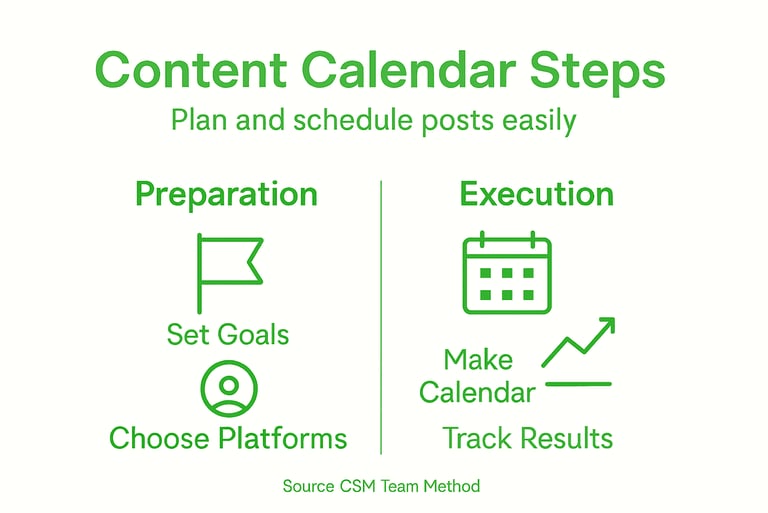
Start by creating a strategic content management framework that aligns with your business goals. Choose a calendar format that works best for you whether it is a spreadsheet, digital project management tool, or specialized social media planning software. Include key details for each planned post such as date, platform, content type, caption, hashtags, and any required media. Consider incorporating important business dates, seasonal events, product launches, and marketing campaigns into your calendar to ensure timely and relevant content.
Develop a balanced content mix that prevents audience fatigue and keeps your feed dynamic. A good rule of thumb is to alternate between different content types like educational posts, behind the scenes glimpses, customer testimonials, product showcases, and interactive content such as polls or questions. Plan your content at least one month in advance but remain flexible enough to accommodate trending topics or unexpected opportunities for engagement. Regularly review and adjust your calendar based on performance metrics and audience feedback.
Pro tip: Color code your content calendar to quickly visualize different content types and ensure a balanced and diverse social media strategy.
Step 5: Create and schedule engaging posts
Crafting compelling social media content requires a strategic approach that balances creativity, brand personality, and audience expectations. Your goal is to create posts that not only capture attention but also encourage meaningful interaction with your followers.
Leverage social media scheduling tools to streamline your content distribution and ensure consistent posting. Choose a mix of content types that resonate with your audience including educational materials, behind the scenes glimpses, customer stories, product highlights, and interactive elements like polls or questions. Write captions that spark conversation and use visuals that stop users mid scroll. Aim to provide value with each post whether through entertainment, information, or solving a specific problem your audience experiences.


Tailor your content for each platform while maintaining a cohesive brand voice. Instagram might require visually stunning imagery, while LinkedIn demands more professional and informative content. Pay attention to optimal posting times for each platform by analyzing your audience insights. Experiment with different content formats video, images, carousels, and text posts to discover what generates the most engagement. Remember that authenticity trumps perfection social media audiences appreciate genuine human connections over overly polished corporate messaging.
Pro tip: Create a content bank of pre written captions and visuals during your less busy periods to maintain consistent posting during peak business times.
Step 6: Review performance and adjust strategy
Tracking and analyzing your social media performance is critical for continuous improvement and ensuring your content strategy remains effective and aligned with your business goals. Think of this process as a strategic health check for your social media efforts.
Tracking key performance metrics provides actionable insights into your content strategy. Focus on metrics that directly connect to your original goals such as engagement rates, follower growth, website traffic, lead generation, and conversion rates. Use native platform analytics and third party tools to gather comprehensive data. Look beyond surface level numbers to understand deeper trends like which content types generate the most meaningful interactions, what times your audience is most active, and how your posts contribute to broader business objectives.
Develop a systematic approach to reviewing your social media performance. Set a consistent schedule monthly or quarterly to evaluate your analytics comprehensively. Compare current performance against your initial goals and be prepared to make strategic adjustments. This might involve shifting content types, experimenting with posting times, refining your messaging, or reallocating resources to platforms delivering the best results. Remember that social media strategies are not static blueprints but living documents that require ongoing refinement and adaptation.
Here’s a quick reference for tracking social media metrics and their business impact:
Engagement Rate: Likes, comments, shares. Gauges content resonance
Follower Growth: Change in total followers. Signals audience expansion
Website Traffic: Clicks to your website. Shows lead generation
Conversion Rate: Actions taken after engagement. Tracks true business impact
Post Reach: Number of people who see posts. Indicates content visibility
Pro tip: Create a simple spreadsheet dashboard that automatically tracks your key performance indicators to make data review faster and more intuitive.
Elevate Your Social Media Strategy with Expert Guidance
Struggling to turn your social media plan into real results? That’s a common challenge for many small businesses trying to define goals, identify target audiences, select the right platforms, and keep content consistent and engaging. This article highlights critical pain points like creating SMART goals, building user personas, and mapping your content calendar, all essential for crafting a content plan that truly connects with your audience.
You do not have to navigate these complexities alone. At CSM Team, we specialize in helping small and local businesses build consistent trust-driven visibility through social media strategies and content that actually make sense. Our done-for-you monthly service means no contracts and no surprise fees so you can maintain focus on growth without the overwhelm.
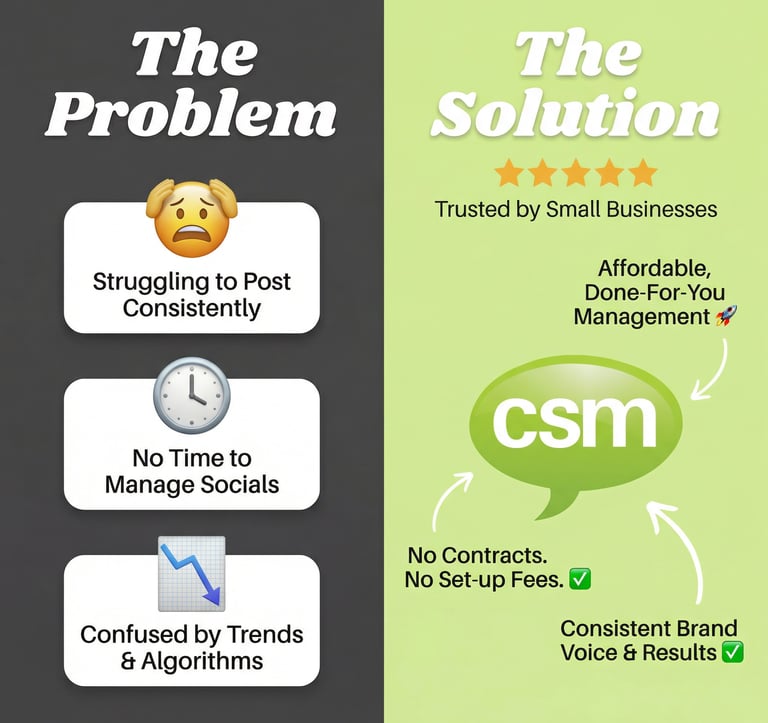
Ready to stop guessing and start growing Discover how our practical social media solutions can turn your step-by-step content plan into measurable success Visit CSM Team today and take the first step to transforming your social presence with confidence and clarity.
DIY Frequently Asked Questions
What are some specific content goals I should set for my small business social media strategy?
Defining content goals for your social media should be specific, measurable, attainable, relevant, and time-bound (SMART). Start by identifying goals like increasing brand awareness, driving website traffic, or generating leads. Set incremental targets such as growing your followers by 20% within the next quarter.
How can I identify my target audience for effective social media content?
To identify your target audience, develop detailed user personas that include demographics, interests, and online behavior. Analyze existing customer data and use social media insights to refine these profiles. This will help you create tailored content that resonates with those most likely to engage with your brand.
Which social media platforms should I focus on for my business?
Select social media platforms based on your audience characteristics and business goals. For instance, LinkedIn works well for B2B audiences, while Facebook is suited for broader consumer reach. Focus on two or three platforms where you can maintain high-quality content and consistent engagement.
How do I create an effective content calendar for my social media posts?
An effective content calendar organizes your social media strategy by scheduling posts and aligning them with your business goals. Include key details such as post date, platform, content type, and any necessary media. Aim to plan your content at least one month in advance while remaining flexible for topical content opportunities.
What types of posts should I create to engage my audience?
To engage your audience, create a mix of content types such as educational posts, customer stories, and interactive polls. Tailor your content for each platform, ensuring it reflects your brand voice. Aim to provide value with every post and consider optimal posting times to maximize engagement.
How can I track and measure my social media performance?
Track your social media performance by focusing on key metrics like engagement rates, follower growth, and website traffic. Regularly analyze these metrics to assess whether your content strategy aligns with your goals. Set a schedule to review your performance monthly and adjust your strategy as needed.
"I love that I don’t have to guess."
Casey L.
★★★★★
Ready To Enjoy Social Media?
Join all of the successful brands who've run their social media presence with common sense precision.
hello@csmteam.ca
PO Box 7 Stn A
Nanaimo, BC V9R5K4
1.833.CSM.TEAM

Insightful Blogs
Post Examples
Client Dashboard
Community Support
Other Stuff
Let's Talk
Fun Stuff