
The Role of Branding Online: Building Trust and Visibility
Many small business owners still believe that online branding is only for big national chains or companies with huge budgets. That idea holds back countless local retail shops from connecting with loyal customers right in their community. This article cuts through the common myths and shows how consistent, authentic branding on social media can make your shop the first choice for local shoppers.
Common Sense Marketing Team


Key Takeaways
Online branding is essential for all businesses: Small retailers can benefit greatly from consistent online branding, regardless of budget or size, by becoming recognizable and trustworthy in their communities.
Consistency is crucial: Maintaining a unified message and visual style across all platforms builds trust and clarity among customers, preventing confusion about the brand's identity.
Focus on engagement: Active communication with customers, including responding to feedback, is vital for establishing trust and fostering relationships.
Tailor branding strategies: Effective online branding requires blending personal, product, and corporate branding approaches to align with customer expectations and business strengths.
Defining Online Branding and Common Myths
Online branding for small retail businesses is simply the consistent way you show up on social media, your website, and anywhere else your customers find you online. It's not about fancy logos or expensive agencies. It's about being recognizable, trustworthy, and memorable to the people in your community who might walk into your store or buy from you. Your brand online is every interaction, every post, every customer review, and every message someone sees from you. When a customer searches for a business like yours on Instagram or Google, your online brand is what makes them stop scrolling and click.
Here's where the confusion starts. Many small business owners believe online branding is only for big companies with massive budgets. That's false. Research specifically examining small and medium-sized enterprises debunks this myth entirely. Your local bakery, boutique, or service business benefits just as much from strategic online branding as any national chain. In fact, local businesses have a competitive advantage because authenticity and personal connection matter more online than size does. The second major myth is that branding equals having a website. Your website is important, but branding is broader. It includes how you talk to customers, the quality of your photos, the tone of your replies, the consistency of your messaging, and the values you demonstrate through your actions. Another common misconception is that personal branding and business branding are superficial or just self-promotion. That thinking misses the point entirely. Strategic branding—whether for you as a business owner or your company—builds trust through authentic communication and reputation management, not vanity.
There's also the myth that consistency doesn't matter for small businesses. It does. When customers see your posts scattered across social media with different messaging, different visual styles, and different values, they get confused. They don't know what you actually stand for. Consistency tells customers who you are and what they can expect from you. Finally, many retail owners think branding takes too much time or requires expertise they don't have. You don't need to be a marketing expert to build a strong brand online. You need clarity about who you are, who you serve, and why your business matters. Then you communicate that clearly and consistently.
Pro tip: Start by writing down three words that describe your business and why customers choose you over competitors, then make sure those ideas show up in every post and interaction you have online.
Types of Online Branding for Small Retailers
Small retailers don't need a one-size-fits-all approach to online branding. Different strategies work for different businesses, and you likely need a combination of them. The main types break down into three distinct approaches, each with its own purpose and payoff. Understanding which ones fit your business helps you focus your effort where it matters most.
Personal branding focuses on you as the business owner. Your story, your expertise, your personality. Customers connect with faces and voices, not just logos. When you show up consistently on social media, share your knowledge, and build relationships with your community, you're doing personal branding. A boutique owner who shares styling tips on Instagram, a contractor who posts before-and-after project photos with honest commentary, or a coffee shop owner who talks about sourcing their beans directly from farmers. These are personal branding in action. This type works exceptionally well for service-based businesses and retail shops where the owner's reputation matters. The second major type is product or service branding, where the focus shifts to what you actually sell rather than who you are. You highlight features, benefits, quality, and why customers should choose your product over competitors. This includes social media content showcasing your products through photos, videos, and customer testimonials. A clothing boutique might showcase seasonal collections, styling options, and price points. A salon might highlight transformation results and services offered. Online brand engagement through product-focused content directly influences purchase decisions. The third type is corporate branding, which encompasses your overall business values, mission, and company culture. This includes sustainability practices, community involvement, hiring practices, and how you treat customers. For small retailers, this might mean emphasizing that you source locally, support local charities, or prioritize ethical manufacturing. Younger shoppers especially respond to brand communication tied to values they care about.
Most successful small retailers blend all three types. You show up as a person, you showcase what you sell, and you communicate what your business stands for. The mix depends on your resources and market. A solo hair stylist might lean heavily on personal branding because clients are booking you specifically. A product-based retail shop might prioritize product branding and corporate values around sustainability or quality. A growing team might balance all three equally. What matters is intentionality. Pick which types align with your strengths and your customers' expectations, then execute them consistently across your social media platforms.
Here's a summary of the main online branding types for small retailers:
Personal branding, owner's story & values: Service businesses, boutiques - Builds trust and personal connection
Product branding, features & quality: Retail shops, service providers - Influences purchase decisions
Corporate branding, company mission and values: Any retail business - Differentiates through culture and ethics
Pro tip: Identify one personal story, one product category, and one core value that define your business, then commit to featuring each consistently across your social media channels over the next 30 days.
How Branding Drives Trust and Local Visibility
Trust is the currency of local retail. When someone finds your business on Google Maps or Instagram, they're asking themselves a single question: can I trust this place? A strong online brand answers that question before they ever walk through your door. Consistent brand identity and authenticity act as trust signals in crowded digital spaces. When your logo, colors, tone of voice, and values stay the same across all your online touchpoints, customers recognize you instantly. They see you're intentional, organized, and serious about your business. That consistency alone builds confidence. Inconsistency sends the opposite message. When your Instagram looks different from your Facebook, when your website has a different vibe than your Google Business Profile, customers get confused. Confusion kills trust. They wonder if you're abandoned, unprofessional, or just don't care about your brand.
Local visibility works hand in hand with trust. When you show up consistently online with quality content and clear messaging, you become visible not just to algorithms but to actual people in your community. Brand experience and storytelling on social platforms directly influence how people perceive your business and whether they choose you over competitors. Think about it from a customer perspective. Someone needs what you sell. They search on Google or Instagram. They find three similar businesses. The first one has no posts in six months and conflicting information across platforms. The second has a polished but generic presence. The third one shows up regularly, shares genuine stories, responds to comments, and clearly stands for something. Which one do they trust? Which one do they remember? The third one becomes visible not just because of SEO or algorithms, but because people talk about them. They leave positive reviews. They tag you in photos. They recommend you to friends. That word of mouth multiplies your visibility exponentially.
Your brand also determines who finds you in the first place. When your content attracts specific audiences aligned with your values and story, you're not competing on price alone. You're competing on fit. A boutique that shares styling tips and sustainability practices attracts customers who care about those things. A service business that shares before and afters builds trust through results. A coffee shop that tells the story behind every bean attracts people who care about quality and origin. These are not generic customers. These are people who already trust your positioning because your brand resonates with them. That specificity is your competitive advantage. You don't need to be the biggest. You need to be the most trusted and visible to the right people. And that happens through deliberate, consistent, authentic branding.
Pro tip: Document one customer success story this week, one team member story, and one behind-the-scenes moment from your business, then post them across your platforms to show the real humans behind your brand.

Essential Elements of Successful Online Branding
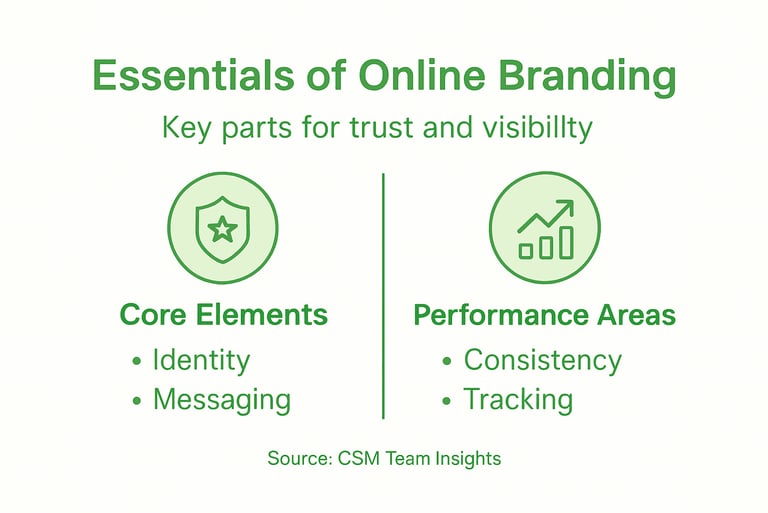
Successful online branding isn't complicated, but it does require you to nail four core elements. Get these right, and you'll build recognition, trust, and competitive advantage. Get them wrong, and you'll waste time posting things that don't move the needle. The first element is brand orientation, which simply means knowing why your business exists and what you stand for. This isn't about writing a mission statement nobody reads. It's about clarity. Why do customers choose you instead of the chain store down the street? What problem do you solve better than competitors? What values drive your decisions? When you're clear on this, every decision gets easier. Do you post that content? Does it align with your brand? You'll know instantly.
The second element is brand identity, which is how you visually and verbally express who you are. This includes your logo, colors, fonts, photography style, and tone of voice. When customers see your posts without even reading the name, they should recognize it's you. A boutique with earth tones and handwritten fonts feels different from one with bold blacks and sans serif text. That difference is intentional identity. The third element is brand marketing, which is how you engage with your audience and communicate your value. Making social media work for your business means posting consistently, responding to comments, sharing valuable content, and building relationships. You're not just broadcasting. You're having a conversation. This is where emotional connection and engaging narratives happen. Stories stick with people. Data doesn't. A statistic about your product's quality means less than a customer testimonial or a behind-the-scenes moment that shows your team cares.


The fourth element is brand performance, which means measuring what's working. Are your posts getting engagement? Are people visiting your website? Are they coming into your store? Are they leaving positive reviews? You don't need fancy analytics tools to start. You just need to pay attention. Which posts get the most comments? What content makes people take action? Use that data to do more of what works and less of what doesn't. When you integrate all four elements, something powerful happens. Your brand becomes recognizable. People know what to expect. They remember you. They recommend you. They choose you over competitors because your brand feels authentic and intentional. That's not luck. That's strategic brand orientation working across all your digital touchpoints. Small retailers absolutely can compete with bigger businesses when they execute these four elements better.
Pro tip: Write down your brand orientation in one sentence, pick three colors and one font for your identity, commit to one posting schedule, and choose one metric to track weekly to see what's actually working.
Risks, Mistakes, and How to Avoid Them
Every small retailer makes branding mistakes. The difference between those who recover and those who spiral is recognizing them early and fixing them fast. The most common mistake is inconsistent messaging across platforms. Your Instagram says you're a luxury brand with artisanal products. Your Facebook says you're budget-friendly. Your Google Business Profile has outdated information. Customers get confused about who you actually are. Confusion erodes trust. When inconsistent messaging damages brand credibility, it's not just a small problem. It signals to customers that you're disorganized or don't care about your brand. The fix is straightforward. Audit every platform you use. Write down your core message, your visual style, and your tone. Make sure all platforms match. It takes a few hours upfront and saves you months of lost credibility.
Another critical mistake is overextending your resources. You see other businesses posting daily on five platforms, so you try to do the same. You burn out. Posts become sporadic. Quality drops. Your audience disappears. Small retailers with limited team bandwidth should focus on mastery of one or two platforms rather than mediocrity across five. Post consistently on Instagram and Google Business Profile. Own those spaces. Once that's working, expand. Depth beats breadth every time. The third major risk is ignoring your actual customers. You post content you think is cool, but your audience doesn't engage. Comments go unanswered. Reviews sit there without responses. Neglecting customer engagement erodes trust and damages brand equity. Your audience is telling you what they care about through their engagement. Listen. Respond to comments within 24 hours. Answer questions. Thank people for positive reviews and address concerns in negative ones. This isn't extra work. It's the core of branding.
There's also the risk of chasing trends that don't fit your brand. TikTok is huge, so you jump on it even though your target audience is 60-year-old women who shop on Facebook. You post trendy content that feels inauthentic to your brand just to get views. It backfires. People sense inauthenticity immediately. Inauthentic communication and superficial tactics damage long-term brand equity. Pick platforms and strategies that actually align with who your customers are and what your brand stands for. Finally, avoid neglecting local market nuances. What works for a national brand doesn't work for you. Your community has specific needs, values, and problems. A local coffee shop that talks about supporting neighborhood farmers will resonate more than generic coffee content. Know your market. Understand your local competitors. Communicate your unique position within your community. These mistakes aren't fatal if you catch them early. Do a quarterly brand audit. Check your messaging. Review your engagement. Look at which content actually drives customers to your door. Then adjust. That responsiveness is your advantage as a small business.
Let's recap the key branding mistakes, their business consequences, & suggested adjustments:
Inconsistent messaging: Erodes customer trust. Audit and unify all platforms.
Overextending resources: Poor engagement, burnout. Focus on 1-2 platforms.
Ignoring customers: Lost trust and missed opportunities. Respond to all feedback.
Chasing trends blindly: Damaged authenticity, loss of fit. Align with audience needs.
Neglecting local context: Brand fails to connect locally. Tailor messaging to community.
Pro tip: Pick two platforms this month, write down exactly how you describe your business on each one, then compare word for word to catch inconsistencies before customers notice them.
Build Trust and Boost Your Local Visibility with a Proven Social Media Strategy
Small retailers often struggle with inconsistent messaging and limited time to maintain a strong online brand that truly connects with their community. This article highlights the critical need to establish clear brand orientation and deliver authentic, consistent content to build lasting trust and visibility. If you find yourself overwhelmed by social media platforms or unsure how to communicate your unique story and values, you are not alone. Achieving steady growth without burning out is possible when supported by practical, done-for-you solutions.
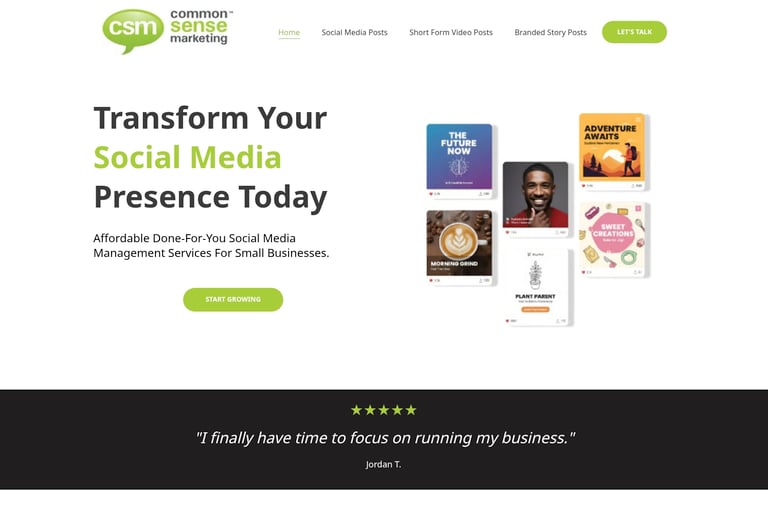
Take control of your brand today with CSM Team, where we specialize in helping small and local businesses build consistent trust-driven visibility through smart social media strategy, tailored content, and ads that make sense. Our month-to-month service requires no contracts and no setup fees, allowing you to focus on what you do best while we make your online presence clear and compelling. Don’t let inconsistent branding hold you back from standing out locally. Explore how you can make social media work for your business with expert guidance. Visit us at https://csmteam.ca and start building a brand your community trusts now.
Frequently Asked Questions
What is online branding for small businesses?
Online branding for small businesses is the consistent way your brand appears on digital platforms, including social media and your website. It's about being recognizable, trustworthy, and memorable to your audience.
How can I build trust through online branding?
Building trust through online branding involves maintaining a consistent brand identity across all platforms, showcasing authentic communication, and actively engaging with your customers through comments and messages.
Is it necessary for small businesses to have a website for branding?
While having a website is important, online branding is broader than just your website. It also encompasses your messaging, tone of voice, visuals, and how you interact with customers online.
What role does consistency play in online branding?
Consistency is crucial for online branding. When your messaging, visuals, and customer interactions are uniform across all platforms, it helps customers recognize and trust your business, avoiding confusion and building confidence in your brand.
"Way easier than I expected"
Mark R.
★★★★★
Ready To Love Social Media?
Join all of the successful brands who've run their social media presence with common sense marketing.
hello@csmteam.ca
PO Box 7 Stn A
Nanaimo, BC V9R5K4
1.833.CSM.TEAM

Insightful Blogs
Post Examples
Client Dashboard
Community Support
Other Stuff
Let's Talk
Fun Stuff